




 1-800-419-1152
 Contact
 Andy's Parts Smarts
 Cart
Cart
Hello, Sign In!

Select Your Vehicle
Select Your Vehicle
QA1 QAP Shocks - 26 Series - 26 Series Monotube Shock Absorber - 7in Stroke - Hyperscrew - 1-4 Valving - Steel

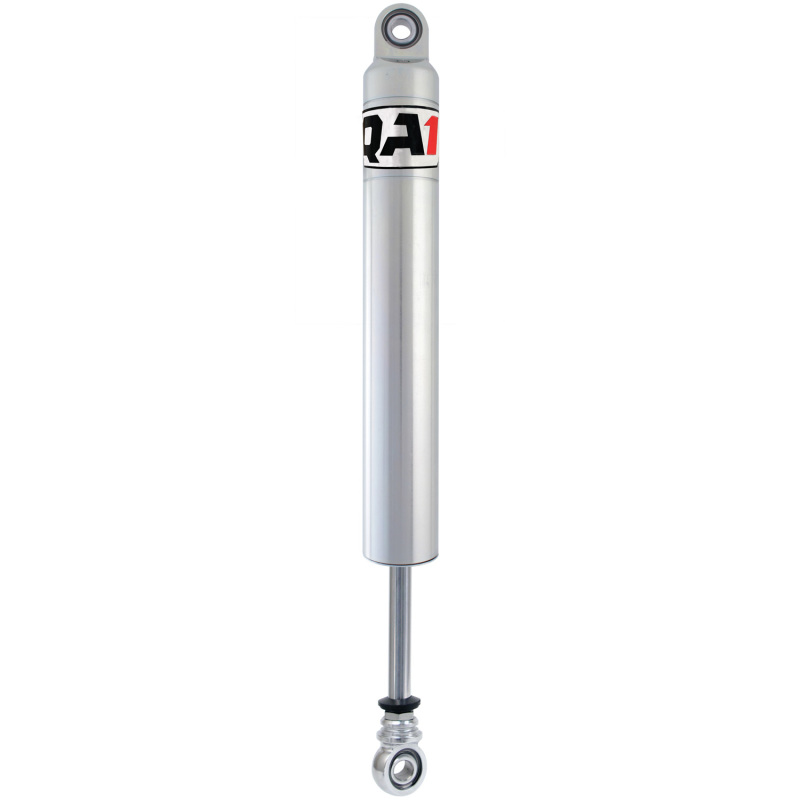




Part #: 2671-4

$243.68 For each

Fits On:
Universal
Description:
QA1 feets 26 Series is a one-piece monotube shock absorber built with a 2-inch O.D. zinc-plated steel body for corrosion resistance. With a 7-inch stroke and hyperscrew valve configuration, it uses deflective disc valving and suits modifieds, late models, and super stocks on rough dirt or bumpy asphalt tracks. Racer rebuildable, 100% dyno tested, and made in the USA.
QA1 feets 26 Series is a one-piece monotube shock absorber built with a 2-inch O.D. zinc-plated steel body for corrosion resistance. With a 7-inch stroke and hyperscrew valve configuration, it uses deflective disc valving and suits modifieds, late models, and super stocks on rough dirt or bumpy asphalt tracks. Racer rebuildable, 100% dyno tested, and made in the USA.
Q: What are struts and shocks? Why buy them?
A: Shock absorbers (shocks) are a device that controls spring motion through dampening. A shock absorber slows down and reduces the vibrations created by imperfections in the roadway. A strut is a shock absorber mounted inside a coil spring that does the same job of dampening. Whether your car uses a strut or shock depends on the factory setup, but both do the same thing and are synonymous in terms of their function. The product listings on our website indicate exactly what is available for your car. Aftermarket struts or shocks are an especially good purchase when lowering your car because they are specially made for optimal performance based on ride height, and can handle the extra stress your suspension will throw at them. Your factory struts or shocks will be out of their "comfort zone" if you lower your car, which causes them to wear down faster and ultimately fail. You can definitely lower your car without replacing the struts/shocks, but they will wear down quickly, and you ride quality will suffer.
Q: How do you install shocks/struts?
A: Shocks are easier to install because there are only two bolts holding in each shock absorber. Struts are a bit more difficult because there is a compressed spring that needs to be removed first. Once the spring has been removed the new strut can be installed with the OEM or aftermarket spring re-installed.
Q: Is there any difference between struts and shocks?
A: Struts/shocks both have the same job by dampening the kinetic energy of suspension travel. Struts perform two jobs: They provide a dampening function like shock absorbers, and they provide structural support for the vehicles suspension. That means that the struts deliver a bit more than shock absorbers, which don't support vehicle weight but control the speed at which weight is transferred in a vehicle. Either way, your options are limited to what is available for your car.
Q: Do shocks come in sets of 4?
A: Struts and shocks are sold individually on our website, but purchasing should always be done in pairs at the minimum (one pair for the front, one for the rear). Most people replace all four shocks/struts at once.
A: Shock absorbers (shocks) are a device that controls spring motion through dampening. A shock absorber slows down and reduces the vibrations created by imperfections in the roadway. A strut is a shock absorber mounted inside a coil spring that does the same job of dampening. Whether your car uses a strut or shock depends on the factory setup, but both do the same thing and are synonymous in terms of their function. The product listings on our website indicate exactly what is available for your car. Aftermarket struts or shocks are an especially good purchase when lowering your car because they are specially made for optimal performance based on ride height, and can handle the extra stress your suspension will throw at them. Your factory struts or shocks will be out of their "comfort zone" if you lower your car, which causes them to wear down faster and ultimately fail. You can definitely lower your car without replacing the struts/shocks, but they will wear down quickly, and you ride quality will suffer.
Q: How do you install shocks/struts?
A: Shocks are easier to install because there are only two bolts holding in each shock absorber. Struts are a bit more difficult because there is a compressed spring that needs to be removed first. Once the spring has been removed the new strut can be installed with the OEM or aftermarket spring re-installed.
Q: Is there any difference between struts and shocks?
A: Struts/shocks both have the same job by dampening the kinetic energy of suspension travel. Struts perform two jobs: They provide a dampening function like shock absorbers, and they provide structural support for the vehicles suspension. That means that the struts deliver a bit more than shock absorbers, which don't support vehicle weight but control the speed at which weight is transferred in a vehicle. Either way, your options are limited to what is available for your car.
Q: Do shocks come in sets of 4?
A: Struts and shocks are sold individually on our website, but purchasing should always be done in pairs at the minimum (one pair for the front, one for the rear). Most people replace all four shocks/struts at once.
If you live in California, please note this item may be subject to a Proposition 65 warning. Click here to learn more.


When you click on links to various merchants on this site and make a purchase, this can result in this site earning a commission. Affiliate programs and affiliations include, but are not limited to, the eBay Partner Network.
Not able to find what you are looking for?

2x Front Shocks Absorbers Struts For 2003-2008 Pontiac Vibe Toyota Matrix

4X Front Rear Shocks Struts & Coil Springs Assembly For 2014-2019 Toyota Corolla
2X Front Complete Struts & Coil Spring Assembly For Acura Mdx 2003-2006

2X Front Complete Struts & Coil Spring Assembly For Hyundai Santa Fe 2001-2006

2X Front Complete Struts & Coil Spring Assembly For Toyota Camry 1992-1996



© 1997- Andy's Auto Sport | All Rights Reserved.